SEE no EVIL, HEAR no EVIL, FEEL no EVIL

The three components of balance comprise of the visual system (SEE), proprioceptive system (FEEL), and the vestibular system (HEAR – located in the inner ear). The brain integrates and processes all the information from these 3 systems to help us maintain our balance or sense of equilibrium. When you start to have problems with your balance, one or more of the above systems might be affected. Let us examine each of these systems briefly.

SEE no EVIL – Visual system

Receptors in the retina are called rods and cones. When struck by light, the receptors send impulses to the brain that provide visual feedback on how a person is oriented relative to other objects. This is how we know when we are upright or lying sideways.

HEAR no EVIL – Vestibular system

The vestibular system in each ear is made up of the utricle, saccule, and three semicircular canals. The utricle and saccule detect up, down, and side to side movements. The semicircular canals detect rotational movement. When the head rotates in the direction sensed by a particular canal, the receptors in that canal sends impulses to the brain about movement. When the vestibular organs on both sides of the head are functioning properly, they send symmetrical information to the brain.

FEEL no EVIL – Proprioceptive system

Proprioceptive sensory/mechanoreceptors from the skin, muscles, and joints are sensitive to stretch, pressure, and movements. With any movement of the body, the receptors respond by sending impulses to the brain which then interprets these movements. This is how even with your eyes closed you can tell if your elbow is straight or bent or which way your head is turned.

How to Decrease Strain on Your Back While Driving

Sitting for a long period of time can put a strain on your back causing lower back pain. Listed below are some tips to reduce strain on your back while driving.

1. Avoid driving for more than 2 hours. Get out and walk around and stretch your legs.
2. Adjust your seat from time to time.
3. Use a lumbar support or seat cushion.
4. Short drivers can purchase a pedal extension to improve their sitting posture.
5. Use cruise control.
6. Move your seat up to avoid slouching.
7. Heat your seat to provide warmth to your muscles.
8. Ice your back when you get to your destination.

Proper Lifting Techniques to Avoid Lower Back Pain

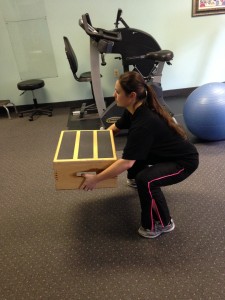
1. Squat Technique
– Get close to the object
– Separate your feet shoulder width apart
– Keeping back straight, hinge at your hips and bend at your knees
– Extend your arms and pick up the object

Squat Technique

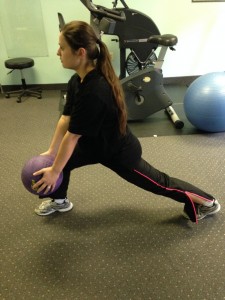
2. 1/2 Kneel Technique
– Get close to the object
– Step forward with one leg to position yourself into a lunge position
– Keeping back straight, lower your body
– Extend your arms and pick up the object

Half Kneel Technique

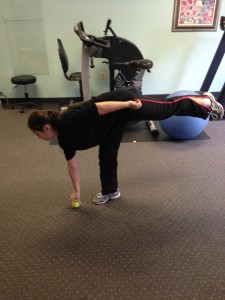
3. Golfers Technique (ONLY for smaller and lighter objects)
– Get close to the object
– Keep back straight
– Pendulum at hip joint in one motion to reach the object
– Extend your arm and pick up the object

Golfer Technique

Tips to Decrease Neck Pain with Computer Usage

1. Make sure your computer screen is at eye level so you do not have to look up or down for a long period of time.

2. Be at a comfortable distance from your computer so you can see the screen clearly. If not, you will flex your neck forward causing strain to the area.

3. Place your mouse in front of your dominant arm at a position where your elbow and shoulder are at rest. Avoid placing your computer on a table that is too high, this will elevate your shoulder causing strain to the area.

If you continue to have neck discomfort, contact Harbor Physical Therapy for an evaluation of your sitting posture and treatment.