Back Pain and Physical Therapy

An episode of back pain can last anywhere from 2 to 8 weeks. Seeing a physical therapist can decrease your healing time and prevent further injury.

Typical treatment will consist of heat or cold packs, electrical stimulation, ultrasound, massage, stretching, postural education, and lumbar stabilization exercises.

Stretching exercises are performed to restore your flexibility and motion. Strengthening exercises are performed to increase the muscular support of your spine to prevent further injury.

Arthritis

Arthritis can cause stiffness, pain, deformity and loss of function of the joints in your body. Physical therapy can help to decrease pain and restore mobility with the use of exercises and modalities.

A physical therapist can instruct you in exercises to help increase flexibility and improve muscle strength around the joint. Working daily on a home exercise program, will help to prevent loss of the use of your joints and preserve muscle strength.
If you suffer from arthritis, see your local physical therapist to create a home program to help improve your quality of life.

Sleeping Positions

Positions you should avoid:

1. Lying on your stomach– This position makes you maintain a position of head rotation. This causes your neck muscles to shorten and can result in pain and stiffness in the morning. Also, sleeping flat on your stomach extends your low back which causes shortening and tightening of the low back muscles.

2. Lying on your side with your arm above your head– This position can create shoulder pain. You can compress the nerves in your shoulder causing your arm to go numb. Also, you are impinging the shoulder joint. This can cause stiffness and soreness at the shoulder joint.

Ideal sleeping positions:

1. Lying on your side with your arms in front of your body and a pillow between your knees– This causes decrease strain on your shoulder and allows your back muscles to remain relaxed. The amount of pillows under your head should be determined by your neck position. Your neck position should be in a slightly flexed position compared to the rest of your body.

2. Lying on your back– In this position, you should make sure you are using the correct amount of pillows as noted above. Also, place pillows under your knees to create a position of decrease strain on your lower back.

Please note if you have current or previous injuries, the position you favor will depend upon making the area of injury as comfortable as possible. If you continue to have difficulty getting comfortable in bed, make an appointment to your local physical therapist. The therapist will determine which position will better suit you based upon your past and current medical history.

Morton’s Neuroma

A Morton’s neuroma is a thickening of the tissue around one of the nerves leading to your toes. Most commonly it occurs between your 3rd and 4th toes. It is also most common in middle aged women and early intervention is important.

Symptoms of a Morton’s neuroma include, tingling, numbness, burning, or pain at the ball of the foot. A common report is symptoms mimicking something stuck to the bottom of your foot.

One of the most common causes is improper footwear. Wearing shoes without much support like flip flops, high heels, and flats can cause a compression and irritation of the nerve. Other causes are previous foot problems and repetitive damage from sports.

Early treatment should include ice and changing footwear. If symptoms persist, consult with your local physical therapist. Physical Therapy would include massage to the foot, stretching, and exercises. This works to help to decrease inflammation and increase blood flow to promote healing. A physical therapist can also educate you on proper foot wear and orthotics. Injections may be needed to help decrease the inflammation. If conservative measures are not successful, surgery is performed to release pressure on the nerve.

X-ray vs. MRI

An x-ray determines the alignment and condition of your bones. Examples of things x-rays can display are deformities of the spine, fractures, bone spurs, tumors, spaces between the discs of the spine, and infections.

MRI stands for magnetic resonance imaging. MRI’s will determine the condition of your muscles/ligaments and the discs in your spine.  Your doctor may not order an MRI initially. Typically no matter what is displayed on the MRI, a physician would recommend physical therapy as the first form of conservative treatment.  An MRI will help the doctor determine if surgery is required for your injury.

Food Safety in the Summer

Food can spoil easily on hot summer days; follow these tips to prevent spoiling your fun with food borne illness. 

  • Plan picnics to include foods that don’t require refrigeration: fruit salad vs. pasta salad (mayo can spoil), PB and J vs. meat sandwiches
  • If the temperature outside is above 90 degrees, food cannot stay out for longer than 1 hour

 Practice Safe Food Handling Techniques:

  • Wash hands, utensils, and food preparation surfaces – moist towelettes are a quick and easy choice for your hands when playing outdoors
  • Rinse fresh fruits and vegetables with water before packing
  • Serve safely keeping cold foods cold (<40 degrees) and hot foods hot (>140 degrees)
  • Don’t cross-contaminate: wash all surfaces very well that have touched raw meats and juices.  Keep raw meats wrapped so that juices don’t touch other foods
  • When preparing salads, chill ingredients before combining (even canned tuna should be chilled before mixing in the mayo!)

Transport Foods Safely:

  • Transport perishables as quickly as possible, and cook immediately or refrigerate
  • Keep perishables refrigerated until just before leaving
  • Consider packing beverages in a separate cooler from perishables
  • Meat, poultry, and seafood may be packed frozen so it stays colder longer
  • Plan food portions to avoid leftovers; place condiments in small containers
  • Place cold foods in an insulated cooler with ice packs and don’t pack up until you’re almost ready to leave. You can also nest perishables in bowls of ice to stay chilled
  • Carry your cooler in an air-conditioned car and place in the shade; keep the lid closed as much as possible
  • Discard leftovers if they have been out of the cooler for longer than 1 hour; if you have to question it – throw it out!

Written by Julie Katz Registered Dietitian- Baltimore, MD

What is good posture and which exercises can I do at the gym to improve my posture?

While standing, if you can draw an imaginary straight line through your earlobe, the tip of your shoulder, through your knee, and the middle of your ankle, you have good posture. Standing with good posture usually involves doing a slight chin tuck so your head is over your shoulders, pulling your shoulders back and tucking in your stomach.

Good posture lends to less stress on your joints and muscles resulting in less discomfort and risk for injury.  At first, maintaining good posture may be tiring. Eventually, you will build up the endurance in your muscles and it will come more naturally.

Here are some examples of stretches that you can perform to help achieve good posture. 

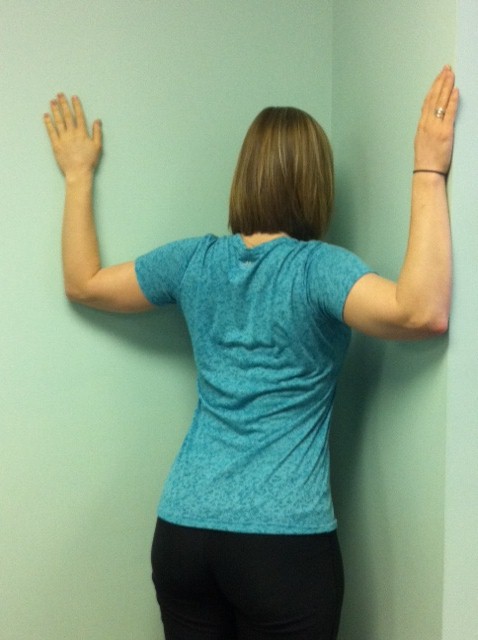
Pectoralis muscle stretch– Just put your hands up on a doorway and gently step through with one foot until you feel a stretch. All stretches should be held between 15-60 seconds.
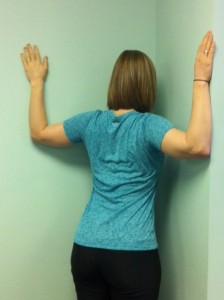
Corner Stretch

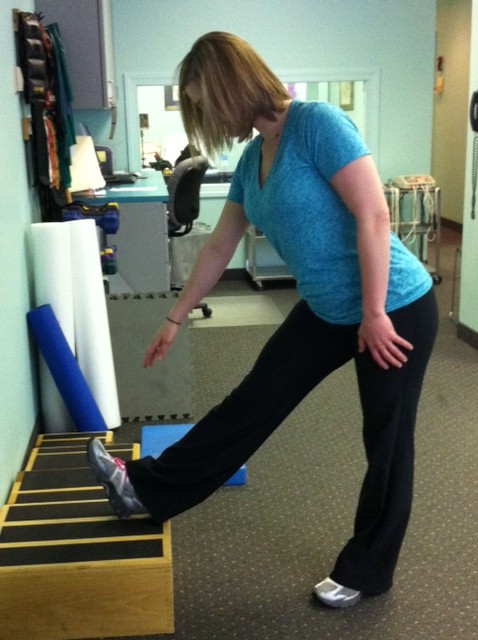
Hamstring stretch– You can sit or stand. Put one foot up on a step or the coffee table and lean toward your foot.
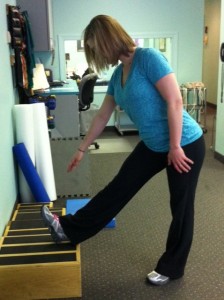
Hamstring stretch

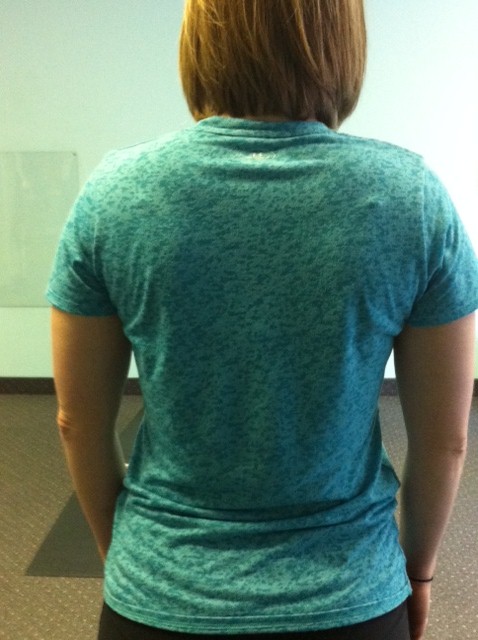
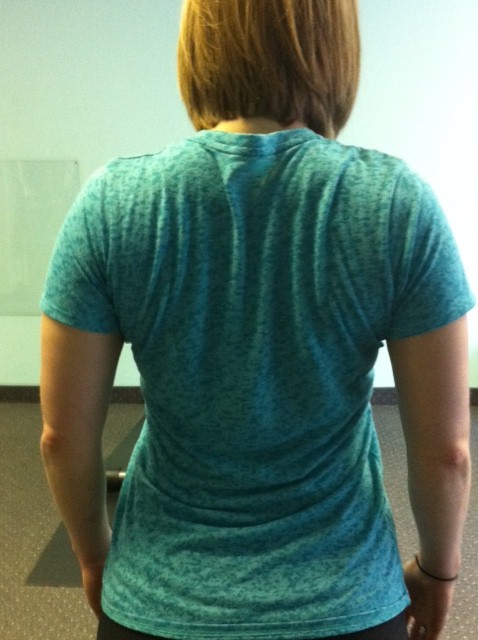
Shoulder blade squeezes– You can just squeeze your shoulder blades together or use an exercise band to row your shoulder blades together.
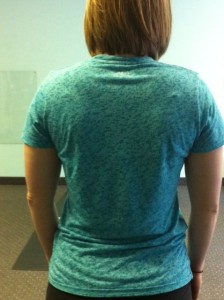
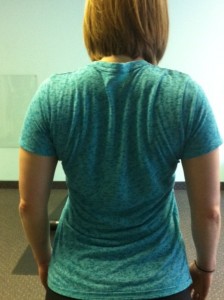
Rest position

Scapular Retraction

Good posture involves training the body to be in a position that results in less strain on your muscles and joints. If you are looking to improve your posture or decrease your neck/back pain with long-term sitting or standing, make an appointment at Harbor Physical Therapy for an individualized treatment program.

The Benefits of Balance Training

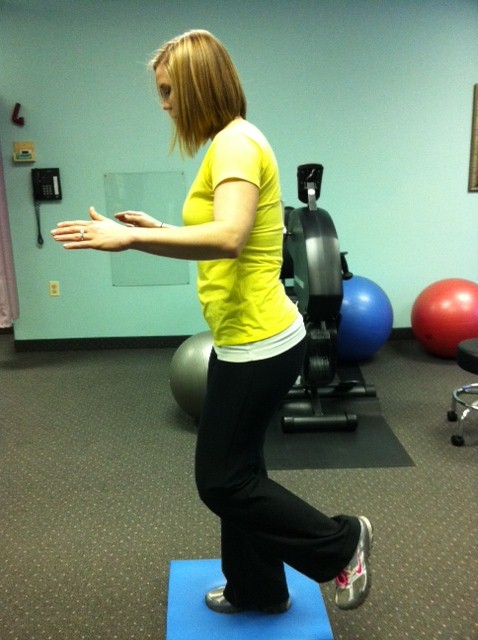
Balance exercises help to rehabilitate, restore, and prevent ankle and knee injuries. They work to increase the stability of the joints in the lower extremity. Balance training can also help to prevent falls in the elderly population. Balance training improves proprioception, which is the ability to know where your joints are in relation to one another.

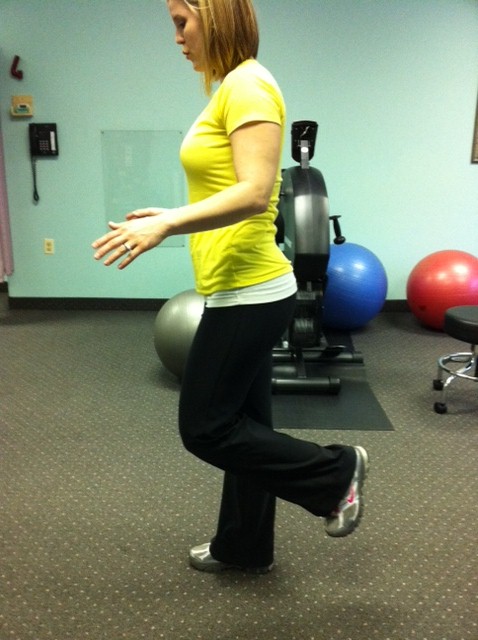
An example of a basic balance exercise is standing on one leg and trying to maintain the position for a certain period of time.  To progress this exercise, it can be performed on an unsteady surface to increase the amount of strength/stability required for the exercise.   If you have a chronic ankle or knee injury, you would benefit from physical therapy using balance training to improve the strength/stability of your joints.

single leg stancesingle leg stance on an uneven surface

Tips to Reduce Back Pain While Driving

Most car manufacturers develop their seating options based on the aesthetics of the car versus the comfort of the driver and passenger.  Back pain can develop or increase from improper seating posture while driving.  Finding the correct seating setting is beneficial, especially for people that drive as an occupation. Therefore, listed below are some tips to reduce back pain while driving.

  1. Avoid driving for more than 2 hours at a time. Get out of the car, walk, and stretch your legs.
  2. Sit with your bottom all way back in the seat and use the vehicles built in lumbar support to provide cushion to your lumbar spine. If you don’t have a lumbar support, roll up a towel and place it in the curve of your low back.
  3. The back rest should have about a 10-15 degree incline. Most people tend to have the back rest too far tilted backward.
  4. Your knees should have about a 45 degree bend. You don’t want your legs so straight that you are reaching for the pedals. It you are short, some dealerships sell pedal extensions.
  5. Use cruise control while on long highway driving.
  6. Try to maintain good posture, and make sure you have good visibility with your mirrors.
  7. Take the wallet out of your back pocket and avoid wearing a tight belt. This can add pressure to the back.
  8. For long car trips, adjust your seat every 30 minutes. To prevent constant pressure on the same areas on your body, slightly adjust the backrest angle.